
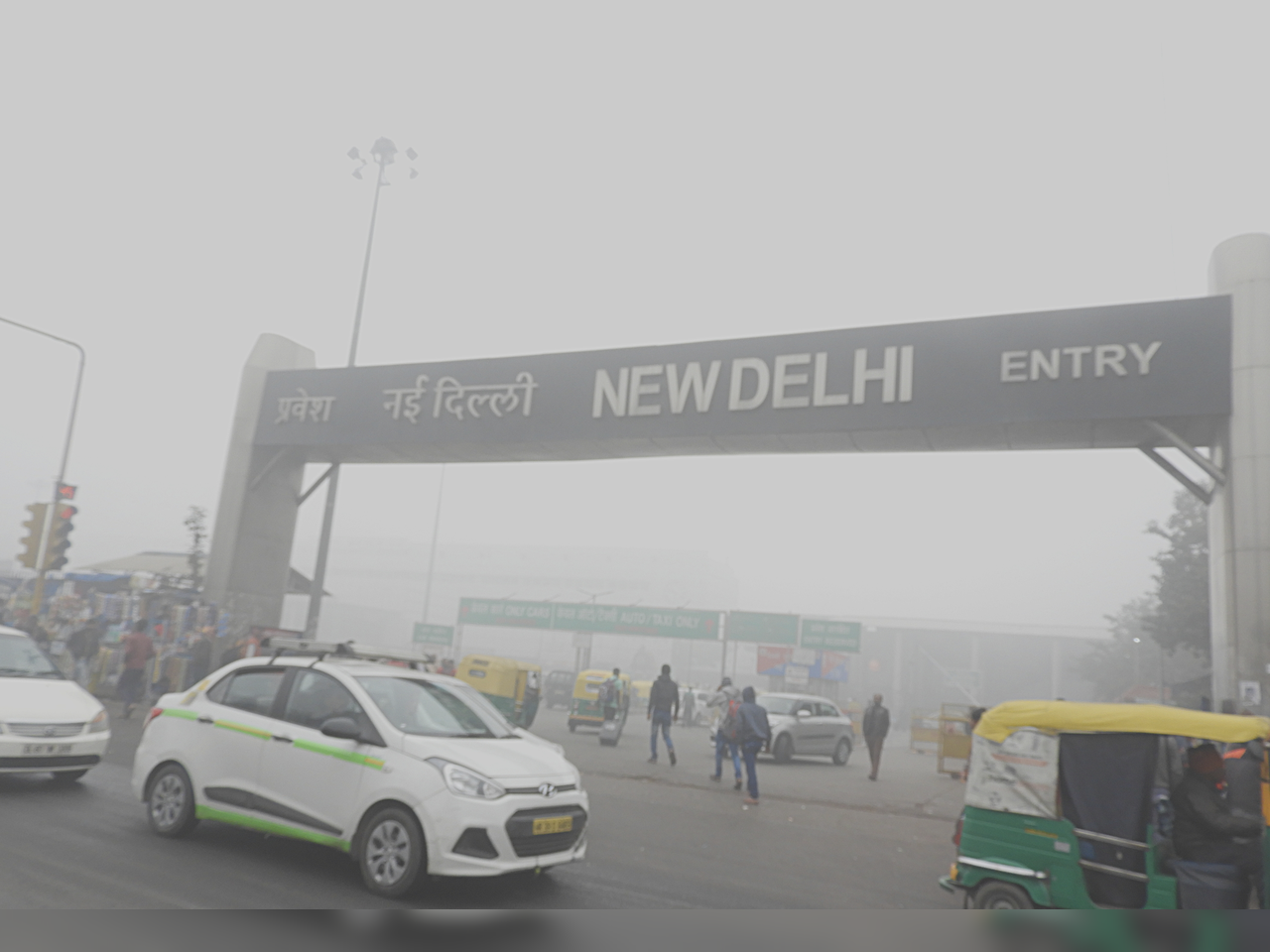

A recently released global report has found that though India, as a country, has slightly improved its air pollution ranking in 2025 compared to year before, five of the top 10 globally polluted cities are in India, including the most polluted city in the world, Loni. Located in Uttar Pradesh, Loni about 20 km away from Delhi and part of the national capital region (NCR), with a PM 2.5 level exceeding safe limits by over 22 times.
PM 2.5 is the ultrafine particulate, considered one of the most toxic pollutants, that can reach the deep crevices of the lungs and trigger a range of diseases, including fatal ones. During 2025, Loni recorded an average PM 2.5 level of 112.5 micrograms per cubic meter; against the Indian maximum limit of 40 micrograms and the World Health Organisation (WHO)’s guideline of 5 micrograms.
The World Air Quality Report 2025 findings were recently published by IQAir for 9446 cities spread over 143 countries, presenting a detailed assessment of global air pollution using PM 2.5 pollutants as the indicator.
Among countries, Pakistan is found to be the most polluted with an average PM 2.5 value of 67.3 micrograms, followed by Bangladesh with 66.1 micrograms and Tajikistan with 57.3 micrograms. India, ranked sixth most polluted in 2025 with an average PM 2.5 value of 48.9 micrograms, improved one step compared to 2024 when it was ranked fifth with 50.6 micrograms.
The report shows that only 14 per cent of global cities met the WHO annual PM 2.5 guideline, down from 17 per cent in 2024, underlining deteriorating global air quality. The report also shows that 130 out of 143 countries and territories failed to meet safe air quality standards and Asia continues to be the worst-affected region, with all the world’s top 25 most polluted cities located in India, Pakistan or China.
Delhi-NCR region most polluted
However, nine Indian cities come within the top 20 most polluted global cities, with cities in Delhi-NCR dominating the list. The NCR is a region centred in the city of Delhi, a special union territory of India that hosts the country’s capital city New Delhi. It encompasses the entirety of Delhi and a number of adjacent districts from the states of Haryana, Uttar Pradesh and Rajasthan.
Apart from the global topper Loni, Byrnihat, an industrial town on the Assam-Meghalaya border that was declared the most polluted city globally last year, was ranked the third most polluted city globally this year with an average PM 2.5 value of 101.1 micrograms followed by Delhi (99.6 micrograms) and Ghaziabad (89.2 micrograms), globally fourth and seventh respectively.
District cities most polluted in Bengal
Ula, a small municipal town also known as Birnagar in Nadia district in West Bengal, was found to be the tenth most polluted town in the world with a PM 2.5 average value of 86.8 micrograms.
According to the report, a copy of which is with this correspondent, Madhyamgram and Barrackpur on the northern fringe of Kolkata as well as Baruipur on southern fringe were the most polluted Bengal cities after Ula. Howrah, Bali, Durgapur, Asansol, Kolkata, Haldia and Siliguri constitute the other top polluted cities in West Bengal.
Kolkata, with an average pollution of 51 micrograms, was ranked 77th globally. The pollution levels of other metro cities like Mumbai, Chennai and Bengaluru were found to be within the national limit of India.
Struggle to meet clean air target
Experts point out that Indian cities continue to struggle with air pollution despite the Union government allocating close to Rs 20,000 crores between 2020 and the present, and argue that a more holistic air pollution combat strategy should be pursued in future.
“The latest IQAir data is a reminder that despite the NCAP 1.0 programme most of the polluted cities are struggling to meet the clean air targets. This stresses that the yet-to-be-announced NCAP 2.0 cannot continue to have a ‘business as usual” approach’,” observed Anumita Roy Choudhury, an air pollution expert from the Delhi-based Center for Science and Environment (CSE).
“NCAP 2.0 requires significant reinvention to shift the focus from city limits to aggressively targeting key pollution sources like vehicles, industry, waste and household energy, across entire airsheds with speed and scale to protect public health,” the expert added.