
Announcements made by Press Information Bureau (PIB) on environment, climate change, public health, urban development and related social sectors
On 19, various union government departments and agencies have published several environment, climate change, public health and related social sectors news releases those stand important for the present and future of the country. The Plurals has collated the key one’s for you.
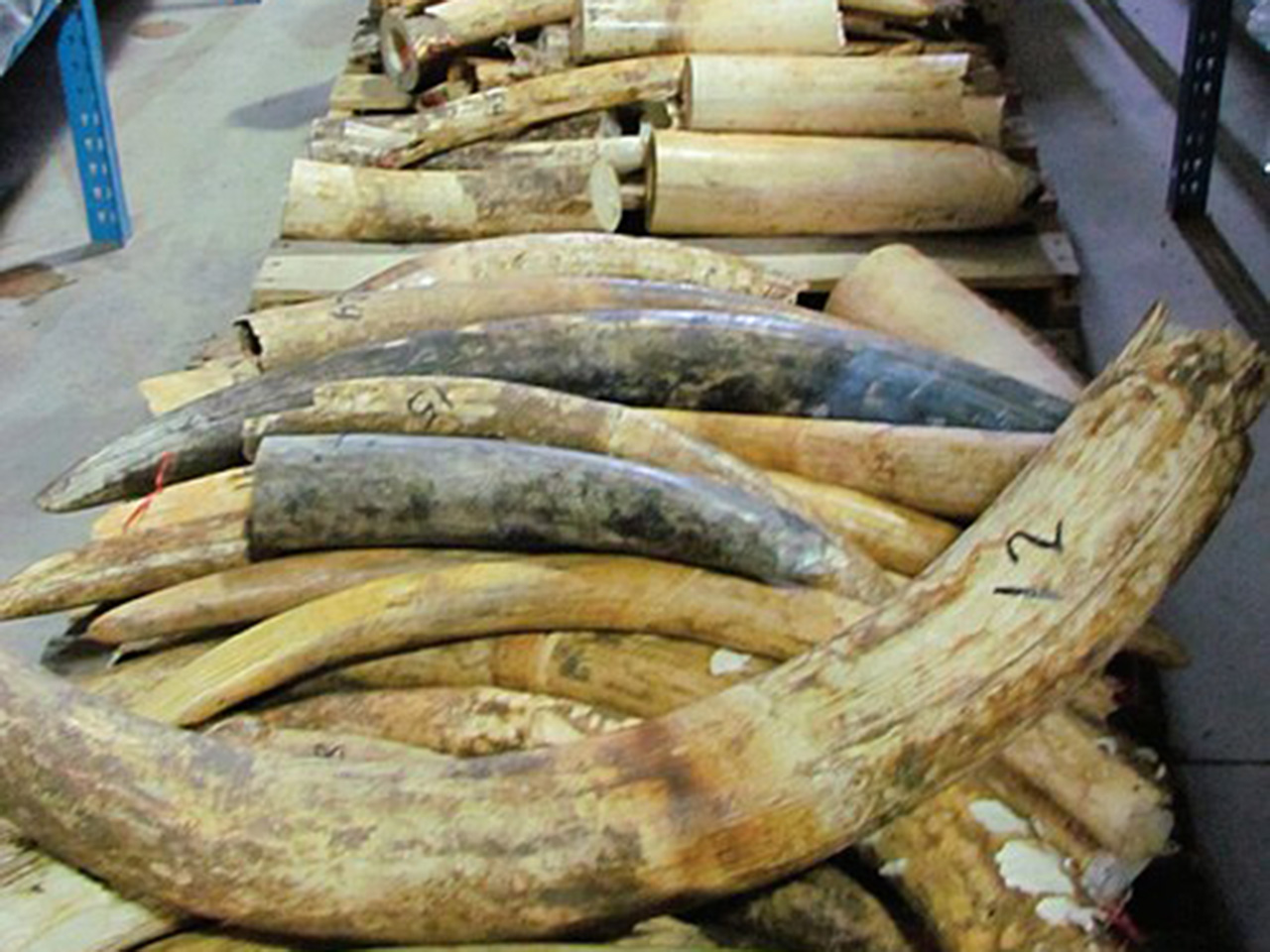
Union ministry of finance announced busting of a wildlife trafficking network linked to illegal trade of ivory artefacts
In a major operation, the Directorate of Revenue Intelligence (DRI) busted a syndicate of wildlife traffickers and seized 54 intricately carved ivory artefacts today.
Acting on a specific intelligence regarding the illicit trade of ivory artefacts, officers of the DRI, planned a meticulous operation at Lucknow and intercepted four persons of a syndicate involved in illicit trade of wildlife items that led to recovery of 54 exquisitely crafted artefacts made of ivory.
The recovered artefacts include animal figurines of bull, elephants, dog; human figurines of warrior, mother holding her child, and other items such as scissors, comb, agarbatti stand, sindoor dani etc. The recovered artefacts made from ivory are exquisite, finely detailed and of potentially substantial commercial and antique value. The seized artefacts made from ivory and four members of syndicate were handed over to UP Forest Department for further investigation.
Detailed report link
https://www.pib.gov.in/PressReleaseDetail.aspx?PRID=2301367®=48&lang=1
Union ministry of environment, forest and climate change allowed cleaner light goods vehicles in Delhi-NCR
The 29th meeting of the Full Commission of the Commission for Air Quality Management in NCR and Adjoining Areas was held on 18.08.2026 under the Chairmanship of Shri Rajesh Verma. It approved issuance of Direction No. 102 mandating new registration of cleaner modes of Light Goods Vehicles (LGVs) in Delhi-NCR in a phased manner, in view of the significant contribution of the vehicular sector to PM2.5 emissions in Delhi-NCR and the disproportionately high particulate emissions from LGVs.
Detailed report link
https://www.pib.gov.in/PressReleaseDetail.aspx?PRID=2301339®=48&lang=1
Vice President reminded forest officers the need to keep optimal balance between development and conservation of forest
Vice President Shri C. P. Radhakrishnan today addressed the Indian Forest Service (IFS) probationers of the 2025–2027 batch and officers of the Royal Bhutan Forest Service undergoing training at the Indira Gandhi National Forest Academy (IGNFA), Dehradun.
Congratulating the officer trainees, the Vice President said that they would shoulder the responsibility of managing India’s forests, wildlife, biodiversity and precious natural resources during the crucial decades leading to Viksit Bharat @2047. He emphasised that the contribution of the Indian Forest Service is integral to strengthening the nation’s ecological security and achieving the goal of net-zero emissions by 2070.
The Vice President said that development and conservation are not opposing forces and can always go hand in hand. He urged the officers to find the optimal balance between conservation and development, ecological security and livelihoods, and present requirements and the interests of future generations.
Detailed report link
https://www.pib.gov.in/PressReleaseDetail.aspx?PRID=2301285®=48&lang=1
PIB points out that India’s makhana sector is set to turn from a traditional crop to global super food
Makhana, scientifically known as Euryale ferox, is an aquatic crop grown mainly in shallow ponds, lakes, and wetlands. The edible part of the plant is its seed. After roasting or processing, the seed is popped and consumed as a fox nut. India is the world’s largest producer of makhana. This position is supported by suitable agro-climatic conditions and long-standing cultivation practices, mainly in Bihar, West Bengal, and Assam.
Over the years, makhana has evolved from a traditional food of Bihar into a widely consumed health food across the country. This transformation has been driven by rising health awareness and supportive government policies. The growth of startups producing value-added makhana products and the increasing role of Farmer-Producer Organizations (FPOs) have also contributed to the sector’s expansion. In line with the sector’s growing importance, the Government announced the establishment of the National Makhana Board in the Union Budget 2025-26. The Board was formally launched in Bihar on 15 September 2025. This initiative marks a significant step towards strengthening and modernizing the makhana value chain.
Detailed report link
https://www.pib.gov.in/PressReleaseDetail.aspx?PRID=2301052®=48&lang=1