
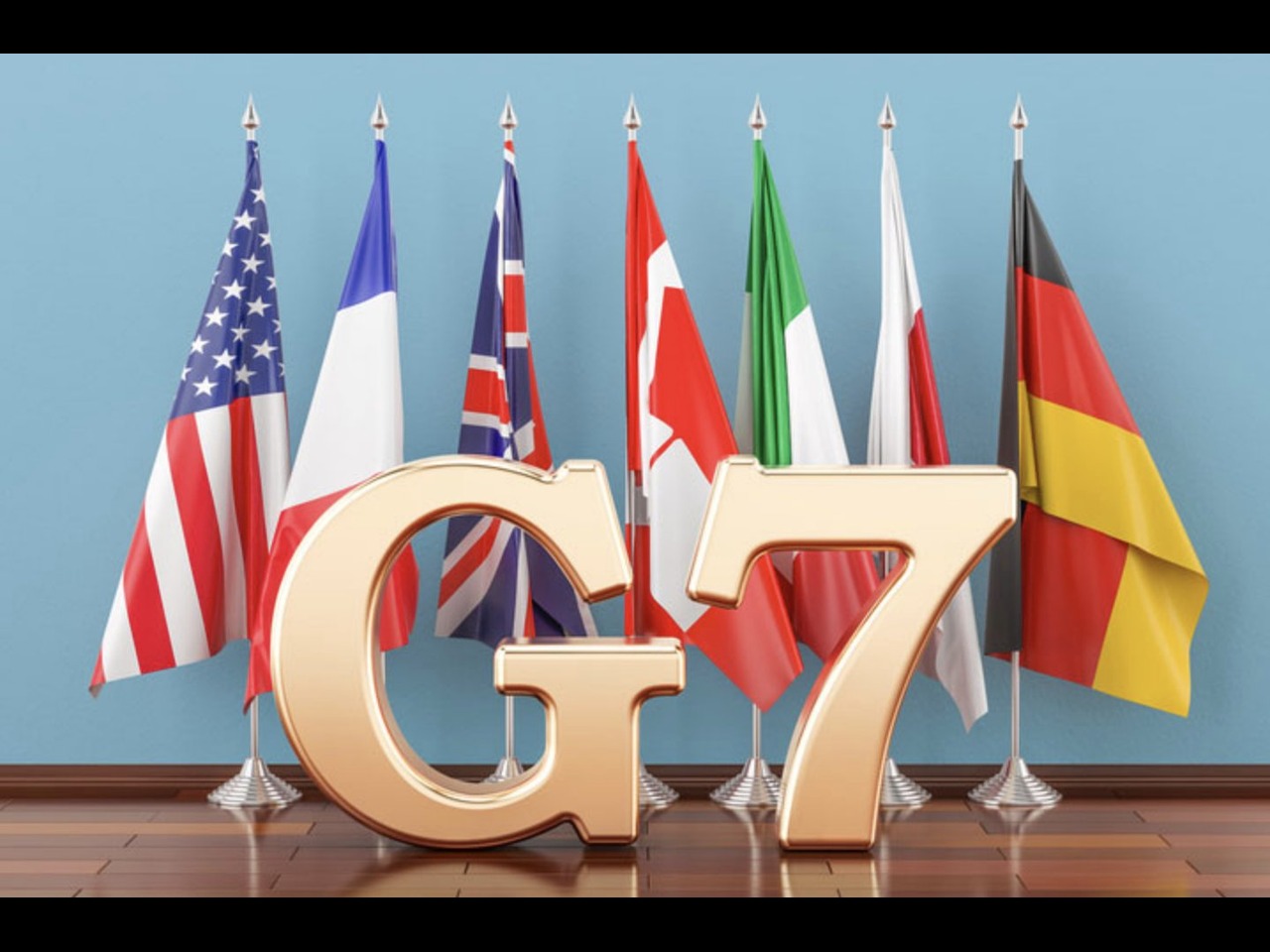

A global network of civil societies has voiced its disappointment over the agenda for the upcoming G7 summit in France for dropping climate- and gender-related concerns. To feature seven of the world’s foremost economic powers, the summit, scheduled from June 15-17, appears to be driven by a “Trump-influenced agenda”, in which the US, Germany, Canada, France, Italy, Japan and the UK will participate.
Climate Action Network-International (CAN-I ), which pointed at the omission and its implications, issued a statement during the ongoing Bonn climate summit that underlines that the G7 nations have historically contributed the most to climate change — and that these very nations have the financial, human and technical means to act decisively and are responsible for addressing climate issues. It noted that four guest countries – Brazil, South Korea, India and Kenya — would also participate in the discussions.
Please-US signal
Despite opposition to the US approach to international law, its confrontational policies with other G7 members and its national security strategy focused on energy dominance, France has catered to US interests, claims CAN-I. This is evident in the exclusion of climate, gender and taxation topics from the official G7 agenda to gain US President Donald Trump’s support for the event, the organisation feels.
Its statement reminds that as the climate crisis is escalating, the chance of limiting global warming to the critical threshold of 1.5 degree C is rapidly diminishing. If current trends continue, this critical limit accepted in the Paris Agreement – 2 degree C maximum but preferably 1.5 degree C – could be breached within a decade or even earlier. World Meteorological Organisation has recently predicted that the global average temperature rise may be as high as 1.9 degree C by 2030.
The inaction of the global North may lead to severe violation of human rights across countries and generations and reliance on fossil fuels has to be addressed, the statement says. Though downplayed by the French presidency so far, fossil fuels have emerged in the discourse around G7 because of the West Asia conflict inpact.
No room for indifference
Referring to a report from the International Energy Agency, CAN-I said: “We are currently confronted with what could be the most severe energy crisis we have ever faced. It appears contradictory to promote a strategy for European energy independence — the need for which is now evident — while simultaneously addressing the global energy crisis at the G7 without confronting our reliance on fossil fuels directly.” France and its allies should not treat the climate crisis as a lesser concern; rather, they should clearly reaffirm their commitment to addressing it.
Conversations surrounding vital minerals, energy security, and geopolitical strife, especially regarding the Middle East and Iran, should facilitate a shift towards a more resilient and secure global energy system that is independent of fossil fuels, the CAN-I statement added.
Fossil fuel tax trouble
G7 nations must convey a strong message endorsing the ongoing negotiations for a United Nations Framework Convention on International Tax Cooperation. This framework seeks to establish fair distribution of taxing rights among nations, create a unified tax system for multinational corporations, including those in the fossil fuel sector, implement a global minimum corporate tax rate of at least 25%, devise mechanisms to tax profits generated by polluting and fossil fuel industries, coordinate taxes on wealthy individuals, and set up international registers of assets and beneficial owners to tackle tax evasion and illicit financial transactions.
The Iran war has led to a heightened focus on the taxation of fossil fuels. The profits of US and European Union companies have significantly increased due to the war, with global earnings reaching nearly $30 million per hour and €81 million per day in Europe since the conflict began on April 1. However, the developed nation is not providing the required level of support to the developing world.