
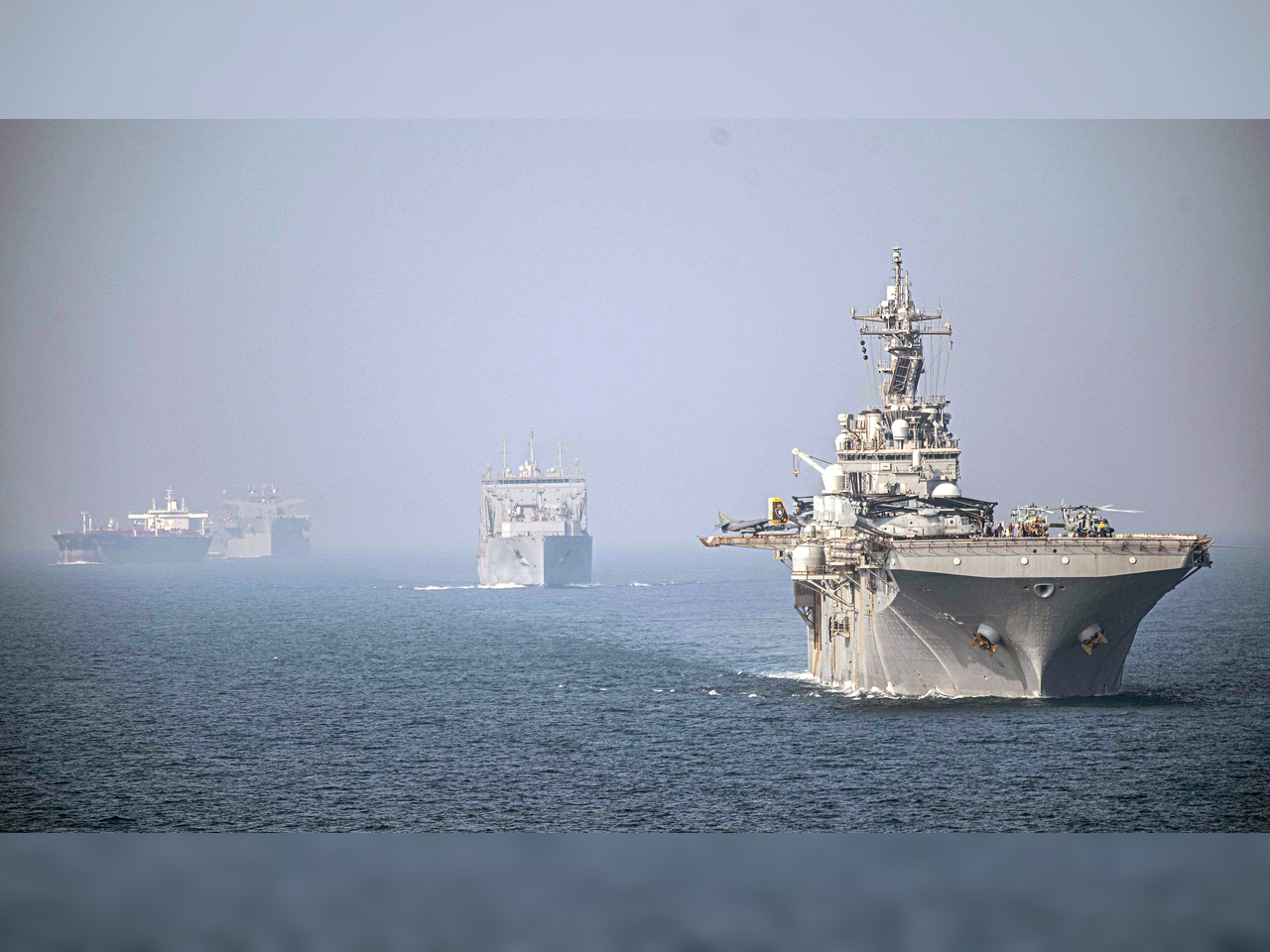
As the middle east war, in between US Israel combo and Iran, is spiraling and threatening to go out of control, International Energy Agency (IEA), on Friday, has suggested a range of demand-side measures that governments, businesses and households can take to ease the economic pressure due to the fallout of the war.
IEA statement has pointed out that “the war is the largest disruption to global oil supply in history, nearly shutting down the Strait of Hormuz, through which ships normally transport about 20 per cent of the world’s total oil demand”.
UN cautioned both sides
On Thursday, UN secretary general António Guterres, said at the European Council in Brussels that the US and Israel must end their bombing campaign before it spirals completely out of control, while Iran needs to stop attacking Gulf neighbours who have played no direct part in the war. He also called for the end to the assault on energy referring attacks in recent days by Israel and Iran on natural gas fields and other energy infrastructure in the gulf which has led to sharp soaring of prices for consumers.
“I am in close contact with key governments around the world, including major energy producers and consumers, as part of our international energy diplomacy,” stated IEA Executive Director Fatih Birol. The official further pointed out that the latest report provides a “menu of immediate and concrete measures that can be taken on the demand side by governments, businesses and households to shelter consumers from the impacts of this crisis”.
Hormuz hindrance
About 20 million barrels of crude oil and oil products travel through this strait every day, according to IEA. “But as these flows have been cut off, crude oil prices have risen above $100 per barrel and refined products such as diesel, jet fuel and liquefied petroleum gas (LPG) have risen even more sharply,” says report, adding that it is essential to resume traffic through the strait of Hormuz to stabilize the global energy market.
The IEA pointed out that while its member countries have agreed to release 400 million barrels of oil from their reserves, which they call a historic step, the supply-side measures alone cannot address this disruption.
Steps to counter
In its new report, IEA outlines ten steps that governments, businesses and households can quickly implement. “These measures focus primarily on road transport, which meets about 45 percent of global oil demand, but also include aviation, cooking and industry,” said IEA. The agency reminded that “ … Many of these measures have been implemented in the past and are now being reconsidered in several countries”.
The measures include:
1. Working from home – reduces transportation fuel consumption.
2. Reducing highway speed limits by at least 10 kilometers per hour – reduces fuel consumption for both passenger and freight vehicles.
3. Using public transportation – reduces fuel consumption
4. Number-plate rotation schemes & phasing out private vehicles in large cities – can reduce traffic congestion and fuel consumption.
5. Increase car sharing – higher car occupancy can lower fuel consumption quickly
6. Adopt efficient driving practices – increasing efficiency in transportation and logistics operations.
7. Pressure on limited fuels can be reduced
8. Reducing air travel where alternatives exist – could significantly reduce the demand for jet fuel.
9. Shifting the use of LPG – from the transportation sector to essential uses like cooking can help keep vulnerable families safe.
10. Alternative clean cooking methods – can reduce dependence on LPG and avoid fuels being harmful to human health and highly polluting.
IEA suggested that the countries may explore shifting from LPG to alternative raw materials such as naphtha. IEA also bats for “well-targeted support mechanisms (instead of) broad-based subsidies” highlighting experiences from previous crises, those vindicate that well-targeted support mechanisms are more effective and fiscally sustainable than the later.