
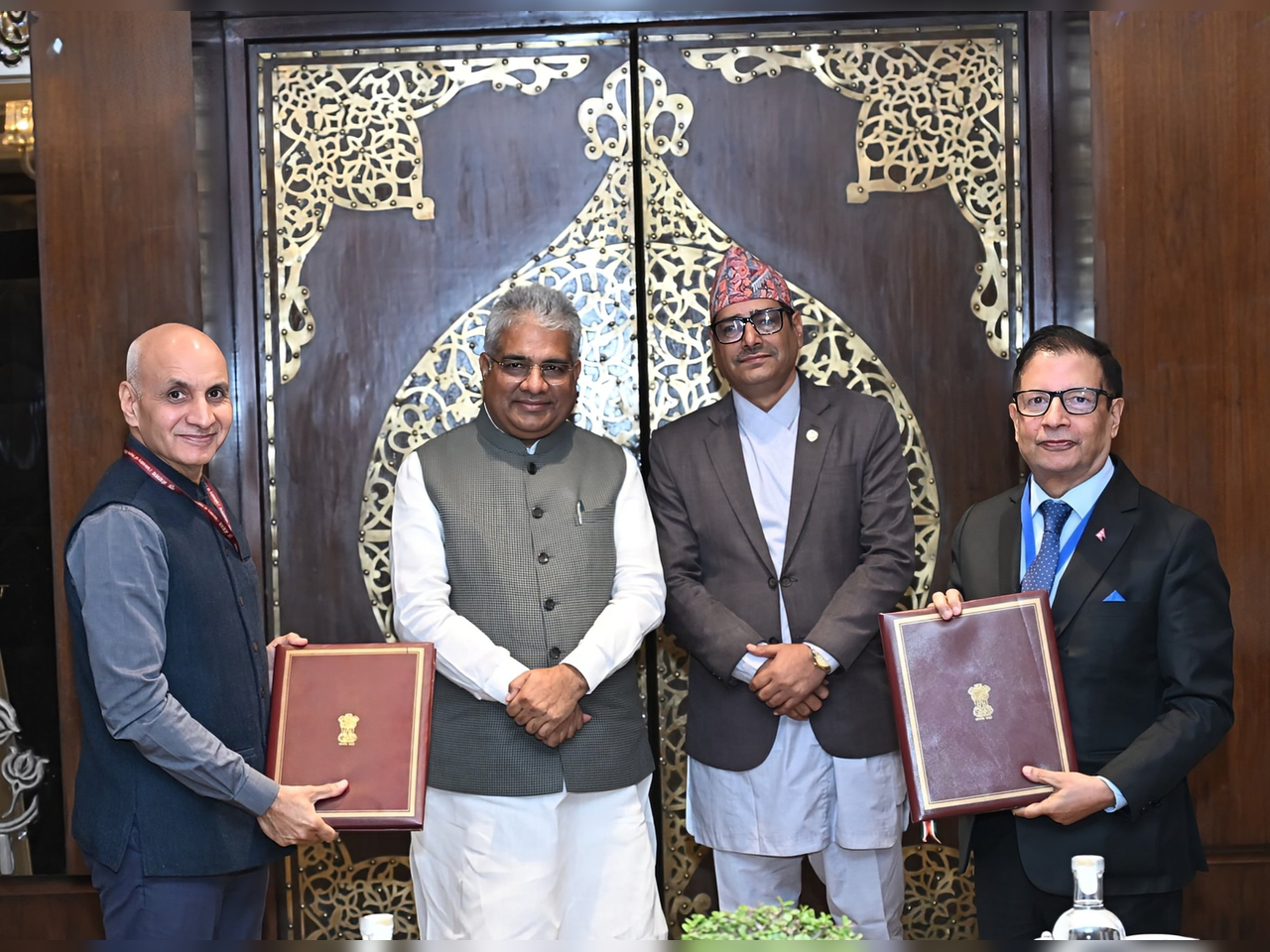
India and Nepal have signed a memorandum of understanding (MoU) to further bilateral cooperation on forests, wildlife, environment, biodiversity conservation and climate change. The MoU will “include restoration of wildlife corridors and interlinking areas, and exchange of knowledge, technical expertise and best practices”, a statement from the Union ministry of environment, forest and climate change of India said.
The signing took place in New Delhi on February 25, with Bhupender Yadav, Union minister of environment, forest and climate change, India, and Madhav Prasad Chaulagain, Cabinet minister for forests and environment, Nepal, attending.
Both India and Nepal are endowed with great biodiversity and natural resources and share a few ecosystems. Both countries also share enormous environmental challenges, some of them shared, such as habitat fragmentation, biodiversity loss, illegitimate wildlife transport and sale across the common border, which affects animals such as tigers, elephants and rhinos in a major way, and habitat fragmentation. Human-animal conflict is a problem faced both by India and Nepal.
The two countries are extremely vulnerable to the effects of climate change.
Conservation, smart green infrastructure
“In view of the shared ecosystems and transboundary wildlife habitats, a need was felt to further strengthen co-ordination and co-operation between the two governments in the fields of forests, wildlife, environment, biodiversity conservation and climate change,” the Indian ministry statement says.
The MoU will focus on strengthening bilateral co-operation in conservation, smart green infrastructure and crime prevention. It “envisages co-operation in formulation of biodiversity conservation strategies at the landscape level with emphasis on key species such as elephant, Gangetic dolphin, rhinoceros, snow leopard, tiger and vultures”, the ministry statement says. “It also provides for strengthened forest and protected area management; restoration of corridors and other interlinking areas towards creation of transboundary conservation landscapes; addressing biodiversity conservation threats; combating forest and wildlife crime; strengthening the capacity of frontline staff of enforcement agencies; and promoting smart green infrastructure in biodiversity hotspots,” it adds.
Illegal trade in animals
The environmental problems shared by the two countries have been taking place over some time, much of it because of human action.
Habitat fragmentation and loss have been caused by infrastructure development, agricultural expansion and urban growth. Their impact has led to disappearing forests and wetlands; wildlife populations have been isolated and migration corridors broken. Rising populations of tigers and rhinoceroses, alongside reduced habitats, have compelled animals to approach human settlements. The porous border between the two countries allows trafficking of body parts of endangered species, such as tiger skins, rhinoceros horns and ivory.
At the same time, both countries remain extremely vulnerable to the impact of climate change: natural disasters, extreme weather events and threats to species such as the snow leopard, Gangetic dolphin and vultures.
Climate action
The MoU has been signed to address India-Nepal co-operation in forest management, biodiversity conservation, climate action, and capacity building of frontline staff. It will also look at restoring animal migration corridors, monitor biodiversity, and institute joint patrols to bring down illegal trade.
“India and Nepal…have established extensive networks of protected areas in their respective territories. Both countries are also parties to several multilateral environmental agreements and conventions,” the ministry statement said.
The MoU will focus on smart green infrastructure to minimise ecological impact.