

“Truly, Seleucus, what a strange country this is!”
From the Bengali play ‘Chandragupta’ by Dwijendralal Roy.
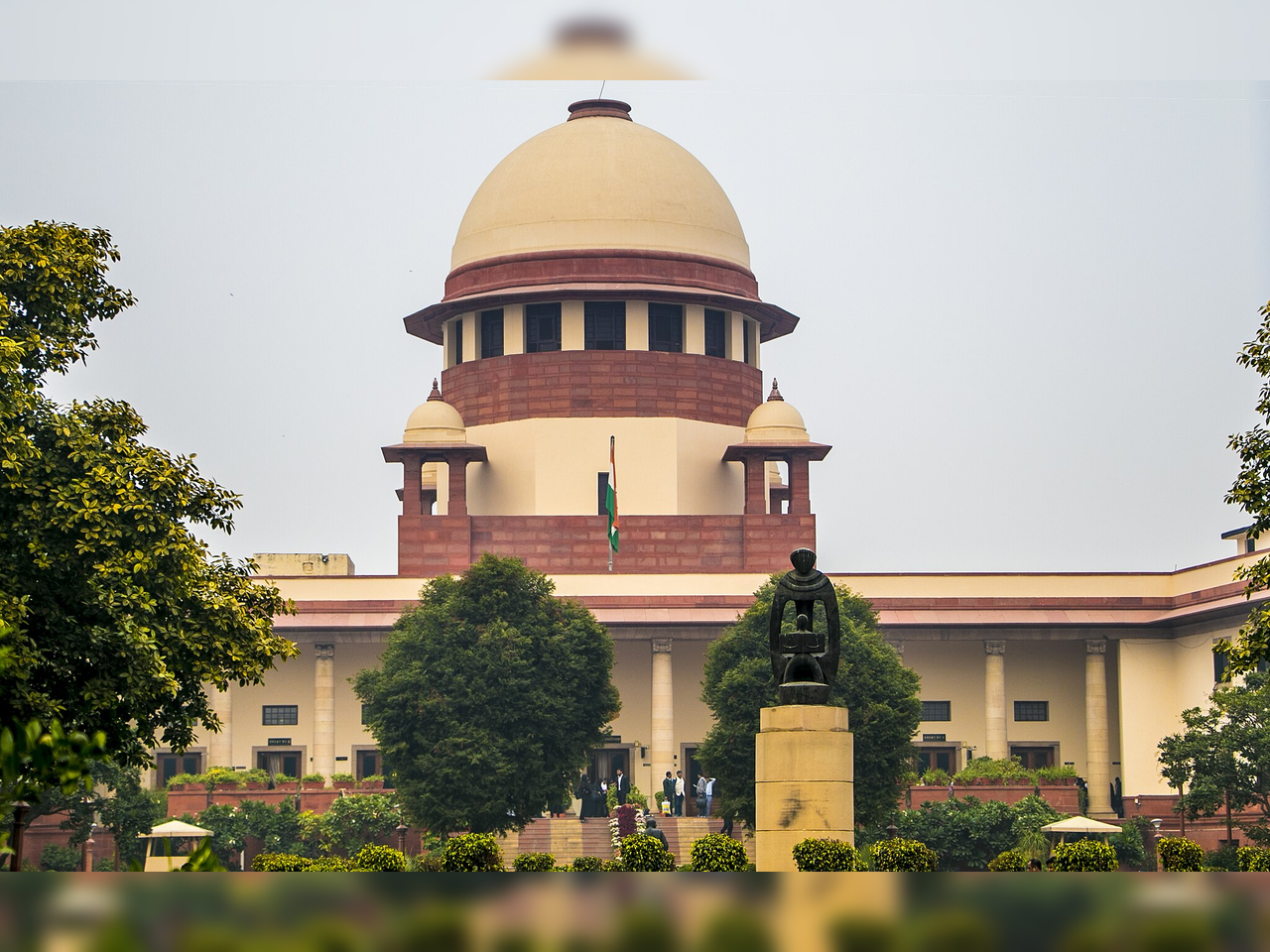
A day after the Supreme Court stayed its own order on the new definition of the Aravalli hills, which had provoked widespread protests as it was felt that it would threaten the very existence of the Aravallis, it is more important than ever, perhaps, to look at another recent Supreme Court decision on an environmental matter. This is about the granting of environmental clearance, on which the apex court drastically position in the last six months.
Let us take a brief look. May 16, 2025. A petition filed by the Mumbai-based non-profit organisation Vanashakti was being heard by the Supreme Court. At the heart of the case was a simple yet fundamental question: should industries be allowed to begin operations first and obtain environmental clearance later? The straightforward answer is—no. By law, the environmental risks of any project must be assessed before it begins. Yet the ministry of environment, forest and climate change attempted to bypass this question. In this case, the Supreme Court struck down two executive instruments issued by the ministry that had permitted post facto or retrospective environmental clearances. The apex court also barred the Centre from issuing any new versions of these instruments — one was a 2017 notification and the other a 2021 office memorandum. Legal experts consider this a landmark verdict. It not only upholds the principles of environmental law but also holds the government accountable for its role in protecting the country’s environment.
Clearance comes first
Environmental clearance is a key preventive measure under the Environment (Protection) Act, 1986, governed by the Environmental Impact Assessment (EIA) Notification, 2006. The EIA process is designed to assess environmental impacts before a project begins. It includes site appraisal, assessment of alternatives, a pre-feasibility report, a detailed site-specific EIA study, an independent and transparent public hearing and a final appraisal by a sector-specific expert committee appointed by the government. Importantly, at the application stage, after the EIA study, or even after approval by the expert committee, if a project appears unsuitable for the site, or if the project proposer submits incorrect or incomplete information, the project can be rejected. There have also been instances where environmental clearance was suspended or cancelled due to a flawed public hearing processes.
The EIA process and India’s environmental regulatory framework are founded on the “precautionary principle”, aimed at understanding environmental risks in advance and averting harm before it occurs. When projects are allowed to commence first and seek clearance later, there is no opportunity to avoid or mitigate impacts that have already occurred — forests are cleared, habitats and biodiversity are destroyed, rivers are polluted, public health is harmed, communities are displaced and so on. No restoration plan or compensation can truly make up for such damage. Notably, the Supreme Court had earlier held in the cases of Alembic Pharmaceuticals vs Rohit Prajapati (2020) and Common Cause vs Union of India (2017) that ex post facto environmental clearances are a “curse” of the EIA notification and “alien to environmental jurisprudence”.
Supreme Court as a guardian
The Supreme Court has long played a pioneering role in environmental protection in India. A pioneer in this field was Justice Kuldip Singh, under whose leadership several environmental laws took shape. He not only declared certain environmentally harmful entities illegal but also noted the absence of any law governing the enormous volume of waste generated daily in India and directed that waste management legislation be enacted. Similarly, he recognised how large quantities of biomedical waste from hospitals, nursing homes and health centres were harming public health, leading to the creation of biomedical waste management laws.
A series of such orders from the Supreme Court instilled courage and motivation among environmental activists and opened up a new horizon for conservation. India’s Constitution clearly states that maintaining a healthy environment is integral to the right to life, and places a constitutional duty on citizens to protect the environment. Various key constitutional provisions were given new interpretations. The Supreme Court even declared that if any illegal activity or construction had occurred in the past causing environmental harm, it must be stopped or demolished.
In the past, we saw how a large hotel built by an influential Union minister near Manali by blocking the flow of the Beas River was demolished on the Supreme Court’s orders. Funds from the World Bank meant for afforestation around the Taj Mahal were misappropriated, with little more than token planting done; on the Court’s directions, the embezzled funds were recovered. In Delhi, a gurdwara and a mosque were obstructing the Yamuna’s flow; to restore the river’s natural course, the Supreme Court ordered their demolition and reconstruction. The Court also compelled, for the first time in India, a railway station to build a waste treatment plant near its premises because huge quantities of waste from the station were flowing directly into the Ganga. In this way, the Supreme Court created an atmosphere where environmental protection was repeatedly affirmed as a fundamental responsibility.
U-turn in six months
On November 18, 2025, just six momths after the verdict on the Vanashakti petition, a directive from the Supreme Court dealt an incalculable setback to India’s environmental movement. Until then, the Court’s view had been that even if the Centre wished, environmental clearances could not be granted after a development project had already been constructed. Restrictions were in place against building massive projects in the name of development while destroying the environment. But on that day, a three-judge bench overturned that position. Environmentalists fear this will increase the tendency toward environmental destruction. One of the three judges dissented, describing the overturning of the earlier verdict as “illegal” and “pernicious”. Environmental destruction and continuous illegal activities cannot be legitimised later. This endangers India’s Constitution, its legal system, and its administration. And this danger has now emerged through the Supreme Court itself. It was seen that individuals who had committed illegal acts sought review petitions in the Supreme Court, and through those reviews their grave offences were effectively pardoned and approvals granted.
India’s Constitution mandates that the administration must comply with the Supreme Court’s directives. But if, under this constitutional framework, the Court today stands and legitimises various illegal acts — such as filling up wetlands, setting up polluting industries without safeguards, destroying biodiversity — in short, granting clearances to those who have “murdered” the environment — then what is the justification for having environmental laws at all? The recent Supreme Court verdict has stripped away the protective shield of environmental safeguards. This is a terrible moment for environmental protection. It is not only unfortunate for the environment but equally dangerous for the public health of all Indians. In effect, an environmental destruction spree appears to have begun across India, and the recent verdict has provided an opportunity to unleash this frenzy. The judicial system itself now stands under a question mark.
The road ahead
Once upon a time, the Calcutta, Chennai and Bombay High Courts issued one landmark environment-protecting order after another. Among the most notable was Justice Bhagwati Prasad Banerjee’s groundbreaking judgment of April 1, 1996 ,on noise pollution, which held that no one can be forced to become a “captive listener”. This new thinking compelled the Centre to enact laws to curb noise pollution. Seeing vast mango orchards in Mankundu, Hooghly district, being destroyed by promoters, Justice Banerjee held that not only officially recorded forest land but all trees and vegetation must be protected. When rampant sand theft occurred along Chennai’s coastline, the Madras High Court ruled against the sand mafia. The Supreme Court supported the pollution control boards of all states and directed that these judgments be implemented.
Today, the Supreme Court has moved far away from its past positions. Cases to curb firecrackers have dragged on for years in environmental courts without orders, while illegal fireworks continue unabated. Those who protested these paid a price: 15 “sound martyrs” are commemorated in West Bengal. Therefore, all environmental activists and people of conscience are urged: remaining silent will only worsen the damage. We must protest. We must reflect on the rationale of this verdict and its future consequences.