
Environment and anti-nuclear activists have point-by-point countered the government’s justification of the SHANTI Bill on nuclear energy, which was passed by both Houses of Parliament and then approved by the President within four days.
The bill was passed in Lok Sabha on December 17, Rajya Sabha on December 18 and cleared by President Draupadi Murmu on December 20.
The Centre, while placing the Bill, has claimed that it would lead to a huge growth in nuclear energy, crucial in India’s transition to clean energy and efforts to counter climate change. Jitendra Singh, Union minister of state, department of atomic energy, had sought to allay fears on safety, the role of the private sector and other matters as raised in the run-up to the Bill’s clearance.
But activists are convinced that many of these threats remain, are real, and may endanger public safety and well-being in a considerable way.
The Plurals, which carried the minister’s version on December 18 as placed in Parliament, considered the statements of several environmental groups as well as political parties on the issue and spoke to three experts, Soumya Dutta, S.P. Uday Kumar and Achin Vanaik, to record their cumulated, point-by-point rebuttal of the minister’s statement made in Parliament.
Dutta is a prominent energy and climate activist and a senior member of National Alliance of People’s Movements (NAPM); Udaykumaran is the convenor of the National Alliance of Anti-Nuclear Movements (NAAM) and Vanaik is the founding member of India’s Coalition for Nuclear Disarmament and Peace (CNDP).
Following are the government statements and activists’ reponses on different aspects of the Bill:
Energy growth
Minister’s statement: India has already achieved nearly 9 GW of nuclear capacity, with targets of 22 GW by 2032, 47 GW by 2037, 67 GW by 2042 and 100 GW by 2047, constituting nearly 10 percent of India’s total energy needs.
Activists’ response: The projections are not based on realistic estimates. The present installed nuclear power capacity is correctly mentioned (8.8 GW), while the other, about 8 GW shown as under construction, is mostly in very early stages. In the last five decades, India’s record of building new nuclear power plants shows that it generally takes 12 to14 years from start of construction to grid synchronisation. Even at a benchmark of 10 years, by 2034-35, we may, at best, have an installed capacity of 16 GW, and, hence it is not possible to reach 22.7 GW by 2032, as shown in government projections. Another 10 reactors of 700 MW each are in pre-project stages. Even if all these break ground, it will be at least 12 years, or 2037, before they are on the grid, said the experts, adding that there has been a consistent history of the Indian nuclear establishment over-projecting the target production, and this has not changed with the Modi government.
The activists pointed out that, overall, globally nuclear power is declining. The contribution of nuclear power in the global electricity mix was 19 per cent at its peak in the mid-90s, but currently only stands around 10 per cent.
In India, currently nuclear power contributes about 3 per cent of India’s total electricity. It has been argued that nuclear energy should not be promoted for a cohort of reasons particularly being too slow, too centralised, too secretive, and, too expensive.
Safety
Minister’s statement: The nuclear safety standards remain unchanged and uncompromised, as per the stringent principles embedded in the Atomic Energy Act of 1962- “safety first, production next”.
Activists’ response: Strongly disagree. With up to 49 per cent ownership and operational control over the entire nuclear fuel cycle now open to private entities, risks of leakages and pilferages of dangerous materials like fissile or radioactive materials increase manyfold, as do the risks ofthese falling in wrong hands.
Seismic risk
Minister’s statement: India’s nuclear plants are geographically located far from seismic fault zones and pointed out that radiation levels at Indian reactors are many times below prescribed global safety limits.
Activists’ response: Activists disagree. They pointed out that the sites of the proposed Chutka and Kindrai nuclear power plants in Madhya Pradesh are almost on top of the Son-Narmada fault, an active seismic zone; and reminded that recently the same government has issued the seismic risk zoning map showing the area as a high-risk zone.
Privatisation
Minister’s statement: While exploration activities may involve private partners, uranium mining beyond specified thresholds would remain exclusively with the government. Similarly, spent fuel management will always remain under government custody, following a clearly defined, long-term storage and handling protocol.
Activists response: The activists warned about the dangers of ownership of nuclear facilities passing into the hands of businessmen who already have questionable environmental records.
The Bill’s push to hand over uranium mining, fuel fabrication, reactor operation and reprocessing to private entities fragments control over one of the most sensitive sectors in the country. India’s nuclear fuel cycle is intrinsically linked to its strategic capabilities and was governed under the Atomic Energy Act, 1962 to ensure sovereign oversight, pointed out the activists echoing a statement jointly issued by organisations Friends of Earth, India, and National Alliance of People’s Movements (NAPM) recently.
The activists also claimed that the government’s renewed interest in nuclear energy is linked to private parties’ effort to get into uncharted terrain, multiplying business and also getting huge financial benefits to launch their nuclear projects.
Cancer
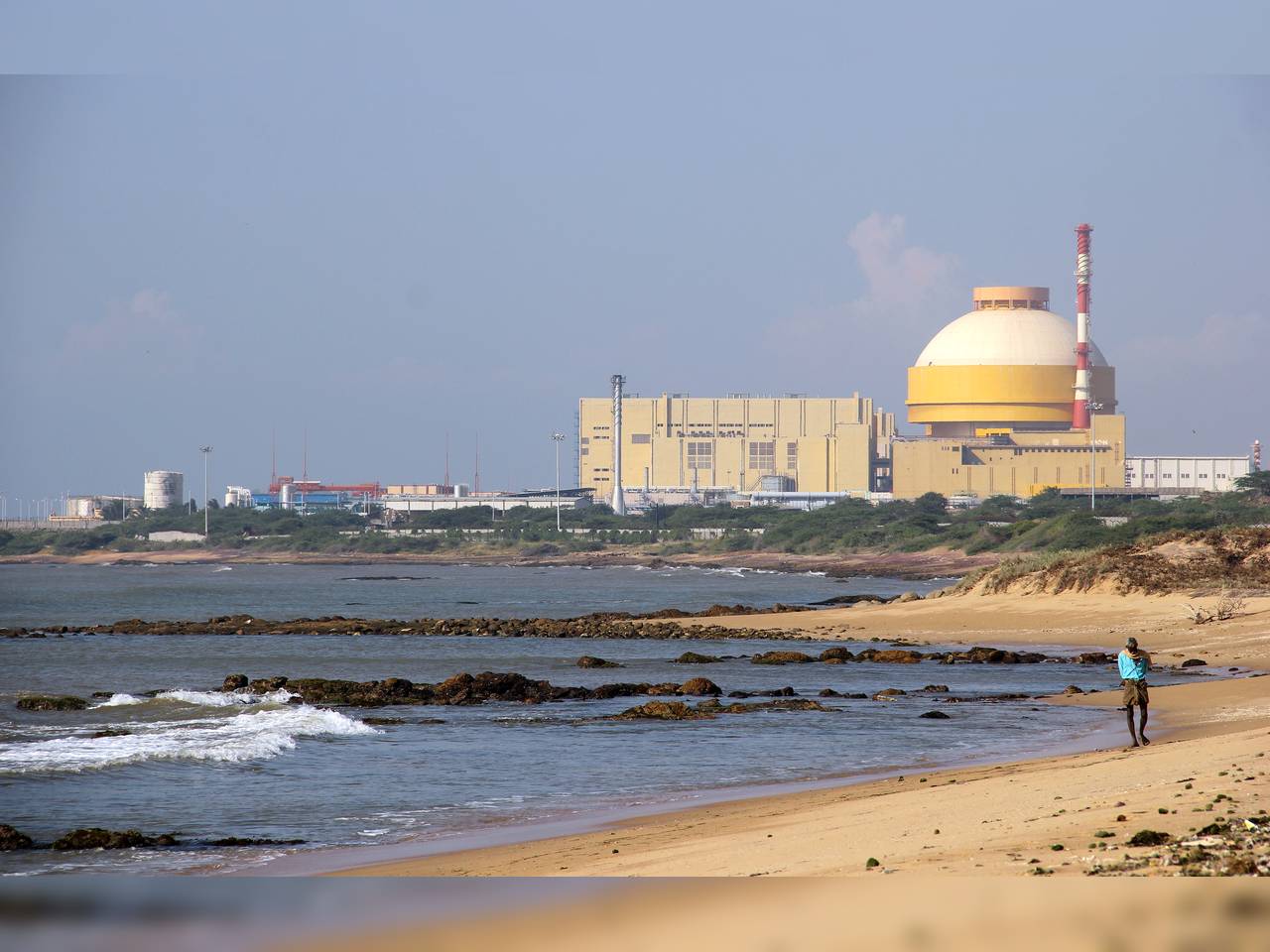
Minister’s statement: There is no scientific evidence of carcinogenic impact from Indian nuclear reactors. He claimed radiation emission from the facilities of nuclear plants such as Kudankulam, Kalpakkam, Rawatbhata and Tarapur were far below levels causing concern.
Activists’ response: A well-known study on Rawatbhata in Rajasthan by Surendra Gadekar, a scientist, and Sanghamitra Gadekar, a physician, ‘Health Survey Around an Indian Nuclear Power Plant’, published in 2002 in ‘Science for Democratic Action’ journal run by leading US-based think-tank Institute for Energy and Environmental Research, clearly showed much higher incidence rates in the villages near the nuclear reactor, compared to far-off villages. The activists also referred to several other studies ranging from the landmark 2008 KiKK study in Germany to studies at Sellafield in the UK and around La Hague in France, to underscore the impact of nuclear radiation on people living close to nuclear power plants.
There are reported incidents causing concern about nuclear safety in Jadugoda, the site of India’s first uranium mines. Safety in Jadugoda turned into a controversial issue with the government-owned Uranium Corporation of India Limited (UCIL) claiming compliance with safety standards even as independent studies and local residents reported severe health and environmental crises due to radiation exposure.
In this context, activists demanded that governments should allow independent expert groups to measure radiation levels and cancer incidence rates in places that could be affected.
Liability and compensation
Minister’s statement: The Bill introduces graded liability caps to encourage participation by smaller investors without diluting victim compensation. In the event of damage exceeding operator liability limits, full compensation mechanisms are to be provided through government-backed funds and international conventions, ensuring that affected parties are not left unprotected.
Activists’ response: The SHANTI Bill hurts here most. By repealing the Civil Liability for Nuclear Damage Act 2010, by introducing graded caps between Rs 100 crore to Rs 3000 crore (maximum), the entire paradigm and burden of responding to any nuclear accident has shifted, claim the activists.
“A meltdown at a 1,000 MW reactor would trigger immediate evacuations, displacing millions and halting all economic activity within a 30–100 km radius. Agriculture would collapse due to radioactive fallout, fisheries would be destroyed, and tourism would evaporate,” reads the joint statement issued by Friends of Earth, India, and NAPM. Such a disaster may mirror Fukushima’s in Japan.
The cost of the Fukushima disaster response has crossed USD 186 billion (Rs. 16,74,000 crore). Compare this to the maximum liability of Rs 3,000 crore set by our government, and one can understand the inadequacy of the provision.
Climate changes
Minister’s statement: Pursuing nuclear power is imperative to reach the renewable power target of the country in the roadmap to combat climate change. Nuclear power would be indispensable in meeting future energy demands, as required in the era of climate change, as it provides reliable, round-the-clock clean energy unlike intermittent sources.
Activists’s response: The government is using the climate change argument as a camouflage as there are several other means to enhance renewable power in the country. This is particularly important as aggressively using nuclear power despite its several limitations potentially places public safety at severe risk. Setting unrealistic nuclear power targets will, in the long run, negatively impact the climate change initiatives in the country.
Foreign influence
Minister’s statement: India would adopt only those international best practices that suit Indian conditions, without compromising strategic autonomy or traditional strengths.
Activists’ response: The US and France are playing a crucial role in India’s rekindled effort to expand its nuclear energy sector, and trying to expand their nuclear market in India. While the US is encouraging it by removing long-standing regulatory barriers, facilitating private sector investment and promoting collaboration in advanced technologies such as Small Modular Reactors (SMRs), France is collaborating on large-scale reactors, joint development of Small Modular Reactors (SMRs) and support for India’s nuclear energy policy reforms.
French president Emmanuel Macron and Indian Prime Minister Narendra Modi issued a joint statement on February 12, 2025, where they stressed that nuclear energy is an essential part of the energy mix for strengthening energy security and transitioning towards a low-carbon economy. “Both leaders acknowledged the India-France civil nuclear ties and efforts in cooperation on the peaceful uses of nuclear energy, notably in relation with the Jaitapur Nuclear Power Plant Project,” read their statement.
Many wondered if it was a coincidence that one day after the Indian Parliament cleared the SHANTI Bill, US President Donald Trump on December 19 signed into law the National Defence Authorisation Act (NDAA) and advised the US Secretary of State to work with the Indian government and “…align (India’s) domestic nuclear liability rules with international norms”.
Congress general secretary and communications in-charge Jairam Ramesh also cited Trump signing the National Defence Authorization Act (NDAA) for the US fiscal year 2026 to make the point. “The Act is 3,100 pages long. Page 1912 has a reference to the joint assessment between the United States and India on the Nuclear Liability Rules. Now we know for sure why the Prime Minister bulldozed the SHANTI Bill through Parliament earlier this week,” said Ramesh recently.
“The new legislation, among other things, did away with the key provisions of the Civil Liability for Nuclear Damage Act, 2010, that had been passed unanimously by Parliament,” pointed out Ramesh. He alleged that the government got the Bill to be cleared in a tearing hurry to restore ‘shanti’ (peace) with US.
Nuclear weapon
Minister’s statement: SHANTI Bill pertains strictly to civilian nuclear energy, with uranium enrichment levels limited to reactor requirements and completely unrelated to weapons-grade activities.
Activists’ response: While preparing nuclear weapons may not be a priority now, the push for nuclear power sits well with the nationalistic politics pursued by the present Union government and influence public opinion on the agenda.