
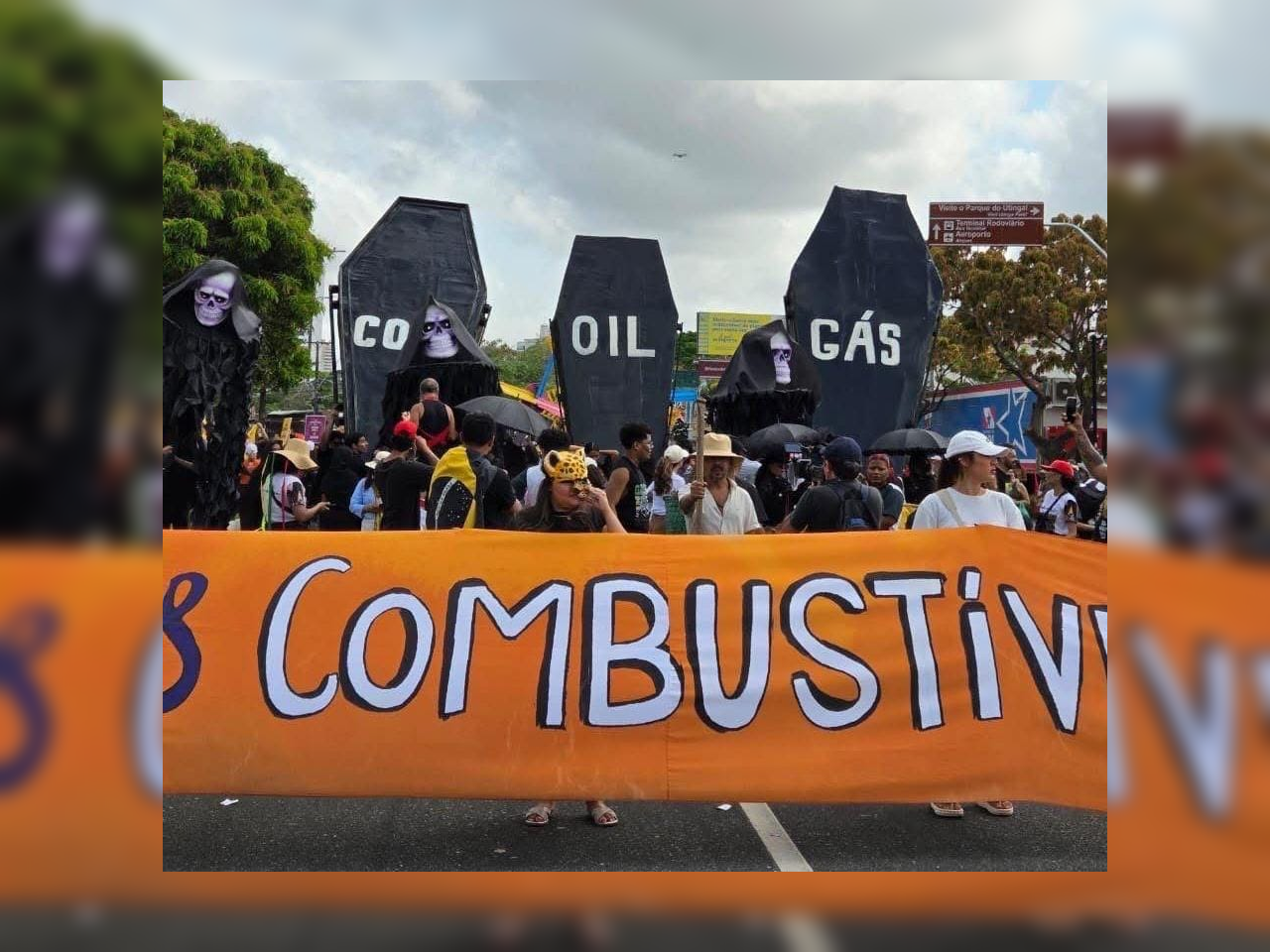
On Saturday morning, the first weekend of COP 30, nearly thirty protesters filled the streets of Belém, calling for an end to fossil fuels, a halt to oil exploration in the Amazon, and stronger protection of Indigenous lands.
The march, organised by the People’s Summit, began at the historic São Brás Market and moved toward Cabana Village, and grew in size as several representatives from social movements across Brazil and the world joined the nearly 5 km long rally; one of the biggest seen after Glasgow protest rally that happened at the sidelines of 2021.
Slogan, songs and security
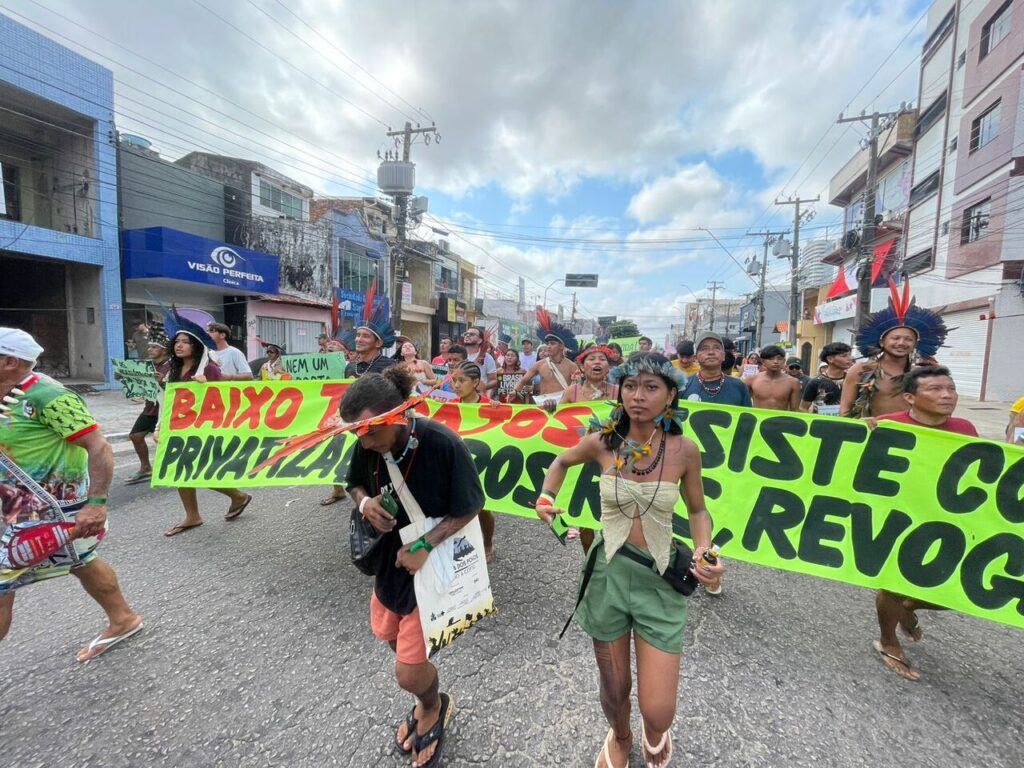
The activists were found to walk with their traditional dresses with slogans and songs on their lips as a large contingent of police was gathered to prevent any security breach as happened on Tuesday, even helicopters were found to monitor the march.
Indigenous peoples from multiple regions and communities, youth activists, environmental defenders and members of the Landless Workers’ Movement took part in the march. Their united demands centred on respecting Indigenous rights, safeguarding forests, stopping destructive mining, and placing community voices at the heart of climate policymaking.
Pressure on global leaders
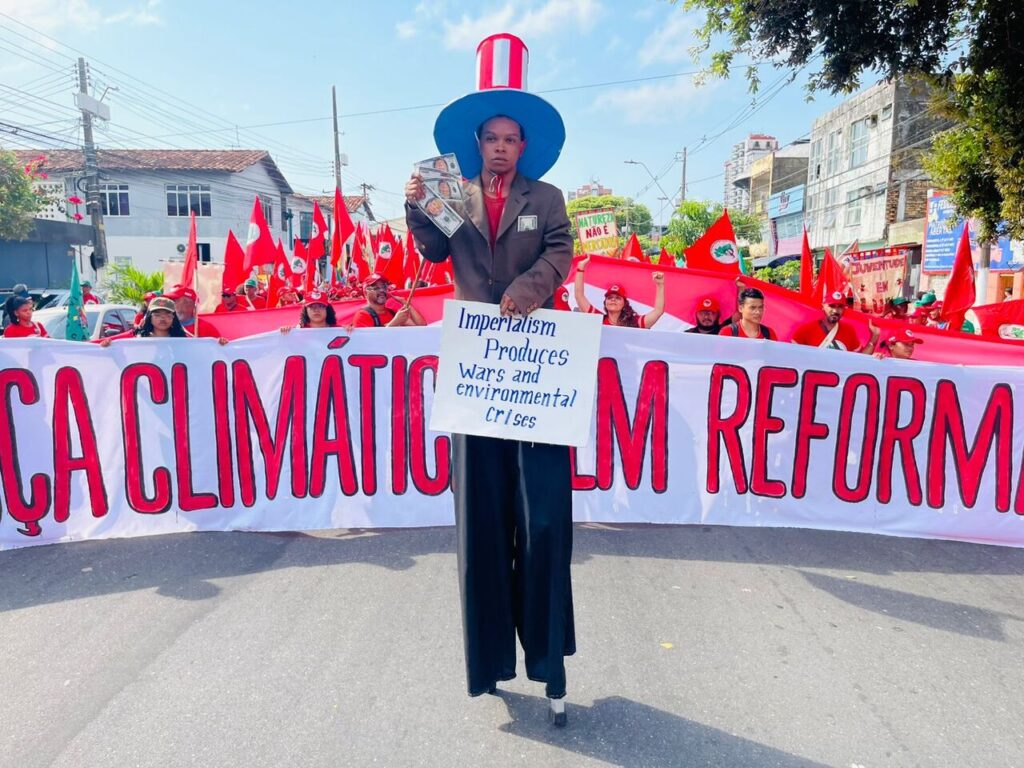
Brazil’s Minister of Environment and Climate Change, Marina Silva, and Minister of Indigenous Peoples, Sônia Guajajara, joined the mobilization, in an apparent effort to put pressure on global leaders present in Belem and addressed the crowd before the march was set off.
Marina Silva highlighted Brazil’s efforts to curb deforestation, noting that the country has achieved a 50 percent reduction in Amazon deforestation, and also reiterated the need for a global roadmap to phase out fossil fuels, saying that Brazil remains committed to pursuing zero deforestation.
Guajajara, speaking from the top of a protest truck, told demonstrators that “the UN’s Blue Zone is here,” referring to the official negotiation area of COP30. Her comments echoed growing frustration within civil society about restricted access to decision-making spaces at the summit.
On Friday, Guajajara had spoken shortly before Indigenous protesters temporarily brought the COP30 talks to a halt. Hundreds gathered outside the main entrance of the conference centre, blocking access for nearly two hours in a peaceful demonstration. Delegates were forced to use a side entrance until security allowed normal access to resume. The minister stressed that countries must recognise the demarcation of Indigenous lands as a central component of climate policy. She also urged civil society organisations to support the defence of these territories from mining and extractive interests.
The world joins Brazil in protest
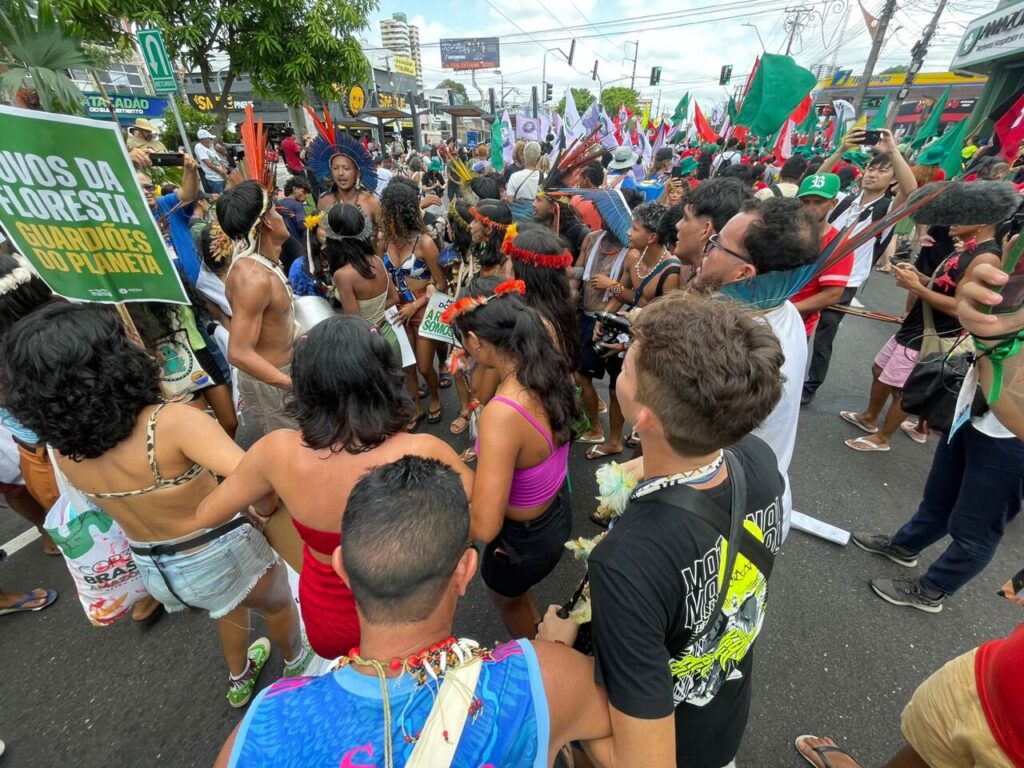
Saturday’s mobilisation also drew international voices.
“Today’s massive march, led by the Indigenous peoples of the Amazon, is an undeniable message to the political leaders inside this COP. The people are united, and we stand in solidarity with all communities being devastated by the fossil fuel industry and agribusiness. We are here to demand climate justice, and that means these talks must respond to the emergency by delivering a rapid and equitable fossil fuel phase-out, a fully-funded Just Transition, and the climate finance owed to the frontlines,” observed Harjeet Singh, a global climate activist based in India.
George Auankaroe, from the Association of Indigenous Leaders of Suriname, said COP30 offers a rare opening for frontline communities to speak directly to world leaders. Argentinian activist Anabella Rosemberg, from the Climate Action Network, criticised her country’s delegation for impeding progress in the negotiations, calling it “a barrier to climate justice.”
Bangladeshi youth climate advocate Sohanur Rahman, executive Coordinator of YouthNet Global, also in the march, highlighted the shared struggles of vulnerable communities across the Global South. “Indigenous peoples are safeguarding the world’s remaining ecosystems, yet their rights are still denied and their lands attacked,” he said. “If COP30 is truly the ‘COP of truth,’ then recognising Indigenous land rights and ending fossil fuel expansion must be non-negotiable. Youth from the Global South stand in solidarity with Amazon defenders because our futures are linked.”
As COP30 continues in Belém, Saturday’s mass demonstration, it is felt, has intensified pressure on negotiators to respond to the demands of communities most affected by the climate crisis. Whether these voices will be reflected in the final outcomes of COP30 remains to be seen, but the message from the streets of Belém is loud and clear.