
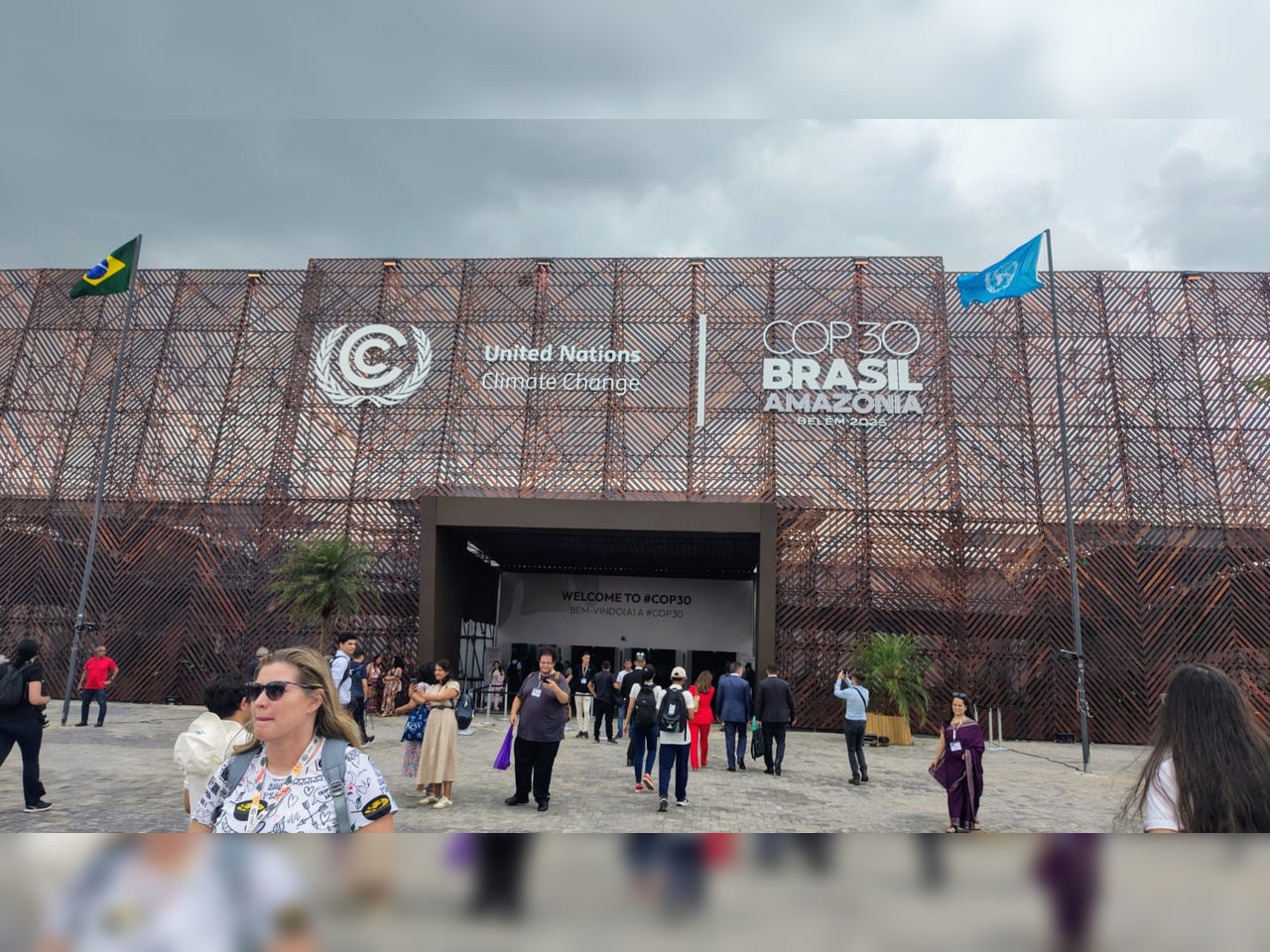

The opening day of COP30, the annual UN climate conference being held this year at Belém, Brazil, started with hope. The UN ‘Fund for Responding to Loss and Damage (FRLD) took a first, big step forward by issuing its first call for funding requests from climate-vulnerable regions under the Barbados Implementation Modalities (BIM).
Loss and damage funds have been set up as a mechanism to help some of the world’s most vulnerable regions meet the challenges of climate change impact. The BIM has set aside a total of USD 250 million initially.
The BIM is the Loss and Damage Fund’s start-up phase. It was so named as it was approved at the fund board’s fifth meeting in Barbados. A senior official from the fund secretariat, presently run by the World Bank, claimed that this call represents a milestone as “it signifies the fund’s transition from establishment to operationalisation”.
After a prolonged — and often bitter — fight between developed countries with developing and less-developed country blocks, the UN agreed to establish the Loss and Damage Fund at COP27
in Egypt in 2022. COP28 at Dubai in 2023 agreed to formally establish the mechanism, meant to address climate damages in the developing and less-developed countries. Experts felt that the call for funding requests should be music across the world, including Sundarban in India, as it promises access to funds for climate-vulnerable regions and communities. Sundarban is a telling example of a climate-damaged region in a developing nation: it has been continually suffering climate-induced loss and damage despite contributing minimally to the global carbon cauldron.
Hoping, but cautious
Harjeet Singh, a frontline global climate activist and Founding Director of Satat Sampada Climate Foundation, said: “While we welcome the launch of the BIM, making the Loss and Damage Fund technically operational three years after its establishment, the fund is already failing the people it was promised to protect.”
He added: “As we sit in Belém, devastating climate impacts are hammering Jamaica and the Philippines. They need help now. Yet the fund is starting with a fraction of the scale required, it has no genuine access for frontline communities and it has completely failed to function as a rapid response mechanism.”
Singh pointed out that the fund requires urgent course correction and demanded that it matches the scale of the crisis.
Required: Rapid access
“The launch of the BIM represents a historic step towards delivering finance for communities already facing loss and damage. Just a week before COP30, the Philippines was struck by two powerful typhoons and the urgency for accessible and rapid funding could not be more real,” said Jefferson Estela, East and Southeast Asia Coordinator, Loss and Damage Youth Coalition.
“For young people on the frontline, this is not just a policy milestone but a matter of justice and survival,” she added.
Experts, welcoming the move, also raised questions about the procedural part apart from the scale of funding. The current figures must not be inefficient to address the sheer magnitude of the climate crisis, and global financial architecture must also be built with the frontline communities’ capacity in mind, an expert said, hoping that the latest step of calling for funds would be “a step towards more accessible, grant-based and efficient finance to create the living conditions that people deserve”.
Fred Njehu, Global Political Lead, Greenpeace Africa, said: “We must recognise that the Loss and Damage Fund is not charity for Africa, it is a matter of climate justice. Africa is already losing 2-5% of its GDP each year to climate impacts and faces adaptation bills of US$30-50 billion annually and they keep increasing.”
Sundarban example
Sandeep Chamling Rai, Global Advisor on Climate Change Adaptation, WWF International, said: “WWF welcomes the launch but US$250 million is a drop in the ocean compared to what’s required…There is an urgent need to scale it up from millions to billions, if not trillions.”
Sanjay Vashist of Climate Action Network South Asia agreed: “For South Asia, already reeling under floods, heatwaves and storms, the launch of the Loss and Damage Fund is overdue but welcome. Yet with only $250 million, it’s a drop in the ocean. COP30 must scale it up and ensure funds reach frontline communities directly, no loans, no debt.”
Vashist insisted that this must be a justice-based, grant-driven fund rooted in transparency and accountability; and those who caused the crisis must pay their fair share.
“Take the case of Sundarban. We have just published a report on non-economic loss and damage in both Indian and Bangladesh Sundarban, which clearly underlines the magnitude of the impact (of climate change) on people, even leaving aside the economic loss and damage.”